

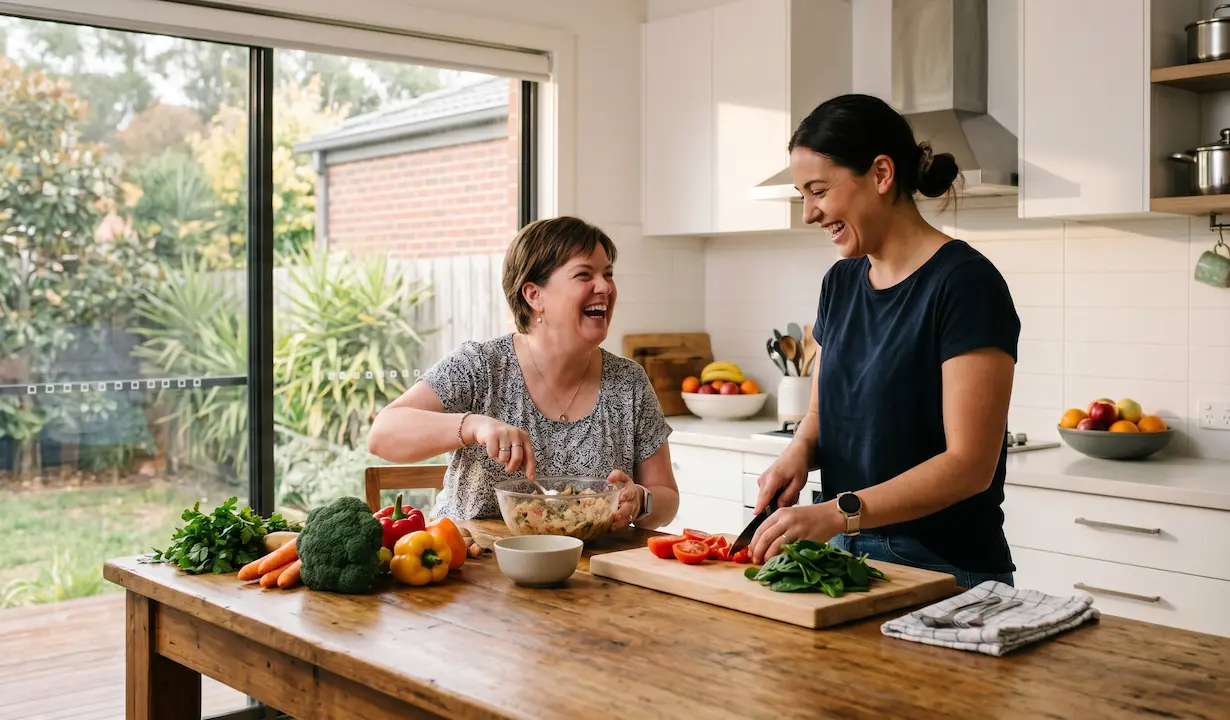
Supported Independent Living (SIL) is an NDIS service that pays for support workers to help you with daily tasks at home. It is designed for people who need a high level of help to live safely and independently. In Williams Landing and across Melbourne, SIL helps you build skills like cooking, cleaning, and personal care.
Key Takeaways: The People Who Help You Live at Home
SIL is all about the "people" who support you, not the "place" where you live. It pays for staff to be with you in your home, often 24 hours a day. This includes help with showering, taking medicine, and making meals. It is perfect for those with high needs who cannot live alone without constant help.
We see many families in Point Cook and Tarneit who confuse SIL with rent. It is important to know that SIL does not pay for your house, bills, or food. It only pays for the support team that keeps you safe and active. At Infinite Support, we provide specialised SIL for people with ASD and psychosocial disabilities.
What Does SIL Funding Cover in Your Daily Life?
SIL is a very hands-on type of support. It is meant to help you manage your life while you gain more confidence.
Personal Care and Hygiene
This includes help with your morning and evening routines. Support workers can help you with showering, dressing, and grooming. They also make sure you take your medication at the right times.
Household Management
Keeping a house running is hard work. SIL covers help with cooking healthy meals and doing the laundry. It also includes general cleaning to keep your home safe and tidy. We help you learn how to do these things yourself over time.
Building Your Independence
A big goal of SIL is to help you do more on your own. Workers can help you learn how to budget your money or use public transport in Melbourne. They can also take you to medical appointments or social groups in the Wyndham area.
What SIL Does NOT Pay For
It is vital to understand the limits of SIL funding. Many people think it covers all their living costs, but it does not.
Rent or Mortgage: You must pay for your own housing costs.
Groceries: Your food and drink are your own cost.
Utilities: You still pay for your electricity, gas, and water.
Home Repairs: SIL does not cover fixing a broken tap or painting walls.
If you need help with the physical cost of a house, you may need to look at NDIS housing support options like SDA.
SIL vs. SDA: Knowing the Difference
Many people hear the terms SIL and SDA at the same time. While they often work together, they are very different things.
Feature | Supported Independent Living (SIL) | Specialist Disability Accommodation (SDA) |
What is it? | The support staff (The People) | The physical building (The Place) |
What does it pay for? | Daily help, cooking, personal care | High-tech homes, ramps, wide doors |
Who is it for? | Those who need help with tasks | Those with extreme physical needs |
You can receive SIL in any home. You could live in a private rental in Williams Landing, your family home, or a special SDA house. We help you figure out which mix is right for your goals.
Who is Eligible for SIL Funding?
The NDIS gives SIL funding to people with "significant" disabilities. This means you need a lot of help throughout the day and night.
SIL is common for people with:
Autism Spectrum Disorder (ASD): When high-level behavioral support is needed.
Psychosocial Disabilities: For those managing complex mental health conditions.
Intellectual Disabilities: To help with learning daily life skills.
We focus on complex cases where safety is the top priority. Our practice capability means we can handle high-risk situations with care and professional skill.
How the "Roster of Care" (ROC) Works
To get SIL, the NDIS needs a very detailed plan of your week. This is called a Roster of Care or ROC. It breaks your week down into 30-minute blocks.
The ROC shows exactly when you need help and how many staff members should be there. It includes "active" support when you are awake and "sleepover" or "active overnight" support for when you are in bed. We work with you to build this roster so it reflects your real life. You can find more about how the NDIS checks SIL on their official website.
Why Our 3+ Staff Model Works for SIL
Infinite Support does things differently to keep you safe. We use a 3+ rotating staff model for our SIL participants. Most providers might only give you one worker. If that worker is sick, your care stops.
By having at least three trained workers who know you well, we ensure you always have help. This is very important for people with psychosocial needs who need a steady routine. We also provide internal counselling for our staff to make sure they stay healthy and focused on your care. This leads to better results and a happier home for you.
How to Apply for SIL in Melbourne
Applying for SIL is a big step. You will need a lot of evidence from health experts.
Functional Capacity Assessment: You need a report from an Occupational Therapist. This explains exactly what you can and cannot do.
Allied Health Reports: You might need letters from your psychologist or doctor.
The Request: You submit these reports along with your Roster of Care to the NDIS.
This process can be confusing. We recommend using specialised support coordination to manage these experts. They make sure the NDIS understands your high support needs. You can also visit the Office of the Public Advocate for advice on your rights in shared housing.
Frequently Asked Questions About SIL
Can I choose who I live with in a SIL home?
Yes, you should have a say in who you live with. If you are in a shared house, your provider should make sure the housemates get along well. We work hard to match people with similar interests and needs.
Do I have to move out of my house to get SIL?
No. You can get SIL while living in your own home or with your family. The funding is for the support staff, so they can come to you wherever you live in Melbourne.
Is SIL the same as a nursing home?
No. SIL is designed to help you be part of the community. It is much more flexible than a nursing home. The goal is always to help you build skills so you can be more independent.
How many hours of support do I get with SIL?
It depends on your needs. Some people get 24/7 care, while others might only need help during the day and a sleepover worker at night. Your Roster of Care will show exactly how many hours the NDIS will fund.
Can I get SIL if I have a mental health condition?
Yes. SIL is very helpful for people with psychosocial disabilities. It provides the steady routine and safety needed for mental health recovery. We specialise in this type of care across Melbourne’s West.